

Late medieval culture was heavily shaped by the realities of the Black Death. Art changed to reflect the fragility of life, giving rise to macabre themes that underscored how mortality affects every social class equally.
This quiz covers the history behind the Dance of Death and the artistic symbols of the period. You will see questions about plague doctors, memento mori imagery, and the intellectual shifts that moved art toward a grimmer view of the human condition.
If this piques your interest, check out our history of pioneers, explore horror genres, or learn about costume design history.
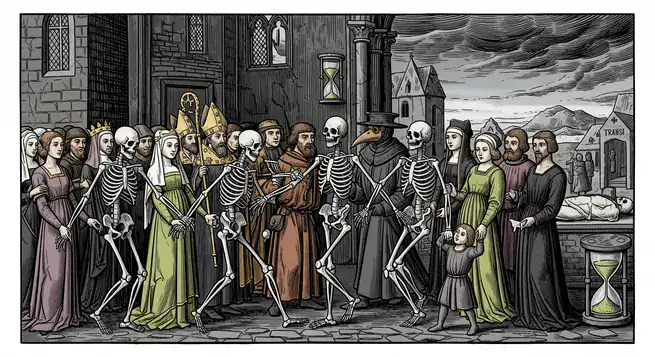
What is the central philosophical meaning behind the ‘Danse Macabre’ or ‘Dance of Death’?
Death as an equalizer of all social classes
Death as an equalizer of all social classes
An aristocratic courtly ritual
An aristocratic courtly ritual
A celebration of a successful harvest
A celebration of a successful harvest
A dance performed by medical doctors to cure plague
A dance performed by medical doctors to cure plague
Which catastrophic historical event significantly popularized the artistic theme of the Dance of Death in the 14th century?
The Black Death pandemic
The Black Death pandemic
The invention of the printing press
The invention of the printing press
The Crusades to the Holy Land
The Crusades to the Holy Land
The rise of the Renaissance architectural style
The rise of the Renaissance architectural style
What is the most characteristic visual motif found in traditional ‘Danse Macabre’ artworks?
Detailed portraits of saints suffering from fever
Detailed portraits of saints suffering from fever
Images of kings feasting with peasants
Images of kings feasting with peasants
Paintings of angels carrying plague victims to heaven
Paintings of angels carrying plague victims to heaven
Skeletons leading people of various status toward the grave
Skeletons leading people of various status toward the grave
Which social figures were frequently depicted in Dance of Death art to emphasize that no one, powerful or weak, could escape mortality?
The pope and the emperor
The pope and the emperor
Saints only
Saints only
Only poor peasants
Only poor peasants
Medieval mythical creatures like dragons
Medieval mythical creatures like dragons
What term, meaning ‘remember you must die,’ describes the genre of art focused on the vanities of life and the inevitability of death?
Vita Brevis
Vita Brevis
Carpe Diem
Carpe Diem
Ars Nova
Ars Nova
Memento Mori
Memento Mori
Which of these was a common feature of plague doctor attire designed to protect them from ‘miasma’ or bad air?
A simple linen veil worn by monks to prevent sneezing
A simple linen veil worn by monks to prevent sneezing
A bird-like mask with a beak filled with aromatic substances
A bird-like mask with a beak filled with aromatic substances
A heavy iron helmet used by knights during the plague
A heavy iron helmet used by knights during the plague
A metal visor polished to reflect the illness away
A metal visor polished to reflect the illness away
Which famous Italian mural in the Camposanto of Pisa serves as an iconic example of late-medieval mortality-themed art?
Detailed maps of trade routes in Europe
Detailed maps of trade routes in Europe
Gothic portrait miniatures of royalty
Gothic portrait miniatures of royalty
Abstract geometric patterns on stained glass
Abstract geometric patterns on stained glass
‘Triumph of Death’ frescoes
‘Triumph of Death’ frescoes
In medieval medical theory, what did the term ‘miasma’ represent in relation to the spread of the plague?
The belief that ghosts of the recently deceased caused outbreaks
The belief that ghosts of the recently deceased caused outbreaks
The idea that disease spread through ‘bad air’ or corruption in the atmosphere
The idea that disease spread through ‘bad air’ or corruption in the atmosphere
The use of magical incantations to ward off sickness
The use of magical incantations to ward off sickness
The scarcity of food supplies during the famine before the plague
The scarcity of food supplies during the famine before the plague
What is the ‘transi’ tomb, a common artistic development in late medieval funerary sculpture?
A realistic map showing which cities were most infected by plague
A realistic map showing which cities were most infected by plague
A sculpture depicting Christ’s entry into Jerusalem
A sculpture depicting Christ’s entry into Jerusalem
A beautiful portrait of a healthy noblewoman as a symbol of life
A beautiful portrait of a healthy noblewoman as a symbol of life
The decomposition and skeletonization of a body as a warning of earthly decay
The decomposition and skeletonization of a body as a warning of earthly decay
Which medieval literary and artistic fable involves three noble youths encountering their own decaying corpses in a forest?
The Three Dead and the Three Living
The Three Dead and the Three Living
The Seven Acts of Mercy
The Seven Acts of Mercy
The Last Judgment of the Soul
The Last Judgment of the Soul
The Four Horsemen of the Apocalypse
The Four Horsemen of the Apocalypse
Regarding the intellectual and social climate, what significant consequence of the plague was often depicted in late-medieval art, reflecting a change in societal attitudes?
An increased focus on realistic portraiture of common citizens
An increased focus on realistic portraiture of common citizens
The exclusive patronage of art by new merchant classes
The exclusive patronage of art by new merchant classes
The questioning of traditional institutions and religious authority
The questioning of traditional institutions and religious authority
A resurgence of classical Greek philosophical ideals
A resurgence of classical Greek philosophical ideals
How did the plague affect the intellectual and social climate of the Late Middle Ages as reflected in art? 2. What was the central thematic shift in late-medieval art?
A preoccupation with death and the fragility of life
A preoccupation with death and the fragility of life
A move toward optimistic depictions of the afterlife
A move toward optimistic depictions of the afterlife
An obsession with capturing the realism of natural landscapes
An obsession with capturing the realism of natural landscapes
The total abandonment of religious motifs in church art
The total abandonment of religious motifs in church art
Where were ‘Dance of Death’ murals most commonly found in the context of the medieval community? 1. Primary location?
It was burned after the plague subsided for fear of contagion
It was burned after the plague subsided for fear of contagion
It was exclusively carved into the floors of cemeteries
It was exclusively carved into the floors of cemeteries
It was kept hidden in private royal prayer books only
It was kept hidden in private royal prayer books only
It was often painted on church walls or cloister walks for public viewing
It was often painted on church walls or cloister walks for public viewing
What was the primary function of these public murals? 2. Purpose?
They were meant to amuse children during religious festivals
They were meant to amuse children during religious festivals
They were intended to serve as a sermon on mortality for the general public
They were intended to serve as a sermon on mortality for the general public
They acted as satirical political posters against local kings
They acted as satirical political posters against local kings
They were record-keeping tools for tracking deaths in villages
They were record-keeping tools for tracking deaths in villages
Which imagery in Dance of Death art often represented the seductive or relentless nature of mortality? 1. Visual motif?
A group of monks begging for mercy from a golden statue of death
A group of monks begging for mercy from a golden statue of death
A dancing skeleton playing a musical instrument, typically a flute or fiddle
A dancing skeleton playing a musical instrument, typically a flute or fiddle
A knight defeating death with a shield of faith
A knight defeating death with a shield of faith
A king hiding behind a curtain from a grim reaper figure
A king hiding behind a curtain from a grim reaper figure
Why is the ‘dance’ element significant in these depictions?
To provide instructions on how to survive a pandemic.
To provide instructions on how to survive a pandemic.
To show that only the poor are forced to dance for their sins.
To show that only the poor are forced to dance for their sins.
To depict the suffering of death in the most painful way possible.
To depict the suffering of death in the most painful way possible.
To portray death as a relentless, rhythmic force that leads everyone away from life.
To portray death as a relentless, rhythmic force that leads everyone away from life.
What does the hourglass, often present in ‘memento mori’ scenes, symbolize?
An ancient symbol for a long and healthy life
An ancient symbol for a long and healthy life
A symbol for the medical cures sought by the elite
A symbol for the medical cures sought by the elite
The representation of a specific saint of the plague
The representation of a specific saint of the plague
A personification of time running out for the worldly sinner
A personification of time running out for the worldly sinner
How did the ‘Dance of Death’ challenge the rigid hierarchy of the feudal system?
It showed that the plague only targeted the upper classes.
It showed that the plague only targeted the upper classes.
It emphasized that no earthly status could prevent the inevitable end.
It emphasized that no earthly status could prevent the inevitable end.
It focused on the nobility’s ability to buy their way into heaven.
It focused on the nobility’s ability to buy their way into heaven.
It was used to differentiate between the holy and the sinful.
It was used to differentiate between the holy and the sinful.
What historical change in perception did these works reflect as the plague caused social upheaval?
Art became strictly reserved for the king and his courtly surroundings.
Art became strictly reserved for the king and his courtly surroundings.
Art stopped depicting humans altogether in favor of landscapes.
Art stopped depicting humans altogether in favor of landscapes.
Art shifted to ignoring death entirely in favor of joy.
Art shifted to ignoring death entirely in favor of joy.
Art became more focused on individual salvation regardless of rank.
Art became more focused on individual salvation regardless of rank.
In ‘Dance of Death’ imagery, how were the wealthy elites typically portrayed in relation to their mortality?
They were shown as the leaders of the dance, commanding the skeletons.
They were shown as the leaders of the dance, commanding the skeletons.
They were depicted as the only ones immune to the dance of death.
They were depicted as the only ones immune to the dance of death.
They were highly valued, but ultimately no different than the poorest person’s fate in the painting.
They were highly valued, but ultimately no different than the poorest person’s fate in the painting.
They were rarely included in art, as death was considered a taboo subject for the wealthy.
They were rarely included in art, as death was considered a taboo subject for the wealthy.
In late medieval macabre art, why were figures of power, such as kings and popes, often depicted alongside commoners and skeletons?
To emphasize that death is an equalizer, affecting all people regardless of social status.
To emphasize that death is an equalizer, affecting all people regardless of social status.
To celebrate their elevated social standing.
To celebrate their elevated social standing.
To portray them as having already achieved salvation.
To portray them as having already achieved salvation.
To suggest that their earthly power could protect them from demise.
To suggest that their earthly power could protect them from demise.
Which aesthetic shift in late medieval art marked the transition away from idealized religious figures toward a more realistic, albeit darker, presentation of the human condition?
The Macabre’s focus on the grotesque and physical decay.
The Macabre’s focus on the grotesque and physical decay.
The Renaissance focus on ideal proportions and beauty.
The Renaissance focus on ideal proportions and beauty.
The Byzantine style’s focus on flat, golden, spiritual icons.
The Byzantine style’s focus on flat, golden, spiritual icons.
The Romanesque obsession with heroic, monumental architecture.
The Romanesque obsession with heroic, monumental architecture.
You can do better
Not bad
Great!
If you enjoy looking back at past eras, browse our silent film history, read up on the Hollywood golden age, or see how troubled films shaped cinema.