

Dive into the fascinating world of Charlie Chaplin, the iconic silent film legend whose lovable Tramp character stole the hearts of audiences worldwide. This trivia quiz challenges your knowledge of Chaplin’s most famous character, his innovative stunts, and the creative genius behind his timeless films. Whether you’re a casual movie buff or a dedicated Chaplin fan, these questions will put your expertise to the test.
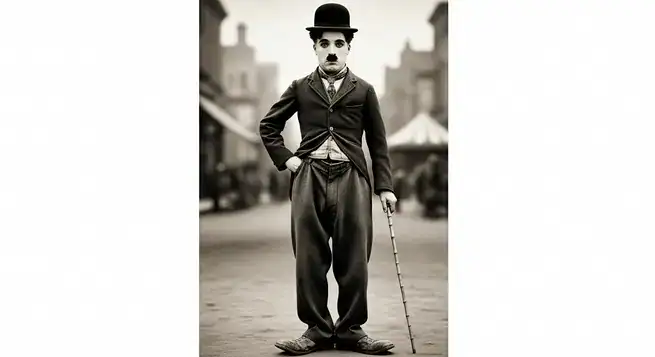
From the oversized pants borrowed from a fellow comedian to the famously small mustache designed to reveal facial expressions, every detail of the Tramp’s costume has a story. Discover behind-the-scenes tales of Chaplin’s meticulous filming process, the incredible physical feats he performed, and the lasting legacy of his artistry. Can you guess how many takes it took to perfect a classic scene, or why Chaplin retired the beloved character?
Ready for more film trivia fun? Explore the captivating world of horror and thriller films, uncover stories from international film stars, or dive deep into the artistry of troubled productions. Challenge your movie knowledge across genres and eras today!
What was the name of Charlie Chaplin’s most famous silent film character?
Charlie the Clown
Charlie the Clown
The Rascal
The Rascal
The Little Tramp
The Little Tramp
The Vagabond
The Vagabond
In what year did Charlie Chaplin first debut his Tramp character on screen?
1910
1910
1921
1921
1918
1918
1914
1914
Which film featured the very first appearance of Chaplin’s Tramp character?
Kid Auto Races at Venice
Kid Auto Races at Venice
The Tramp
The Tramp
The Kid
The Kid
City Lights
City Lights
What item of clothing was a signature part of the Tramp’s costume?
A bowler hat
A bowler hat
A flat cap
A flat cap
A fedora
A fedora
A top hat
A top hat
Where did Chaplin get the idea for the Tramp’s oversized pants?
He found them in a costume shop
He found them in a costume shop
They were a gift from his mother
They were a gift from his mother
He borrowed them from fellow actor Fatty Arbuckle
He borrowed them from fellow actor Fatty Arbuckle
He wore his own pants backward
He wore his own pants backward
Which fellow comedian’s baggy pants did Chaplin use for the Tramp’s costume?
Buster Keaton
Buster Keaton
Harold Lloyd
Harold Lloyd
Roscoe ‘Fatty’ Arbuckle
Roscoe ‘Fatty’ Arbuckle
Stan Laurel
Stan Laurel
What type of mustache did the Tramp wear?
A handlebar mustache
A handlebar mustache
A walrus mustache
A walrus mustache
A pencil mustache
A pencil mustache
A toothbrush mustache
A toothbrush mustache
True or false: Chaplin intentionally made the Tramp’s mustache small so it wouldn’t hide his facial expressions.
False, it was purely for comedy
False, it was purely for comedy
True
True
False, it was a makeup artist’s idea
False, it was a makeup artist’s idea
False, he copied it from a German soldier
False, he copied it from a German soldier
How many takes did Chaplin famously require for a single scene in the film ‘City Lights’?
50 takes
50 takes
150 takes
150 takes
342 takes
342 takes
500 takes
500 takes
Which film features Chaplin’s famous roller skating stunt where he skates blindfolded near a gaping hole in the floor?
City Lights
City Lights
The Gold Rush
The Gold Rush
The Circus
The Circus
The Modern Times
The Modern Times
In ‘The Gold Rush’, Chaplin performed a stunt involving teetering on the edge of a cliff. What did the cabin actually do in the film?
It collapsed into a river
It collapsed into a river
It teetered on the edge of a cliff
It teetered on the edge of a cliff
It rolled down a mountain
It rolled down a mountain
It was buried by an avalanche
It was buried by an avalanche
What was Chaplin’s original source of inspiration for the Tramp’s costume?
A painting he saw in a gallery
A painting he saw in a gallery
A mix of different characters he observed on London streets
A mix of different characters he observed on London streets
A costume from a British music hall production
A costume from a British music hall production
A dream he had as a child
A dream he had as a child
Chaplin described the Tramp’s costume as a collection of contradictions. Which item, despite its ill-fit, was part of his effort to project ‘gallantry’ or ‘dignity’?
The baggy pants
The baggy pants
The tight jacket
The tight jacket
The small mustache
The small mustache
The worn-out shoes
The worn-out shoes
According to Chaplin, which part of the Tramp’s costume specifically symbolized a ‘striving for dignity’ or an ‘effort to look sophisticated’?
The vest
The vest
The collar
The collar
The bowler hat
The bowler hat
The cane
The cane
What was unique about the Tramp’s shoes according to Chaplin’s costume design?
They were intentionally too large and worn on the wrong feet
They were intentionally too large and worn on the wrong feet
They were painted to look like leather
They were painted to look like leather
They were polished to a mirror shine
They were polished to a mirror shine
They had metal taps for sound effects
They had metal taps for sound effects
In ‘The Circus’, Chaplin performed a high-wire stunt. What made this scene particularly dangerous?
He was surrounded by monkeys who climbed on him during the act
He was surrounded by monkeys who climbed on him during the act
The wire was greased with oil
The wire was greased with oil
He was blindfolded the entire time
He was blindfolded the entire time
The wire was set on fire
The wire was set on fire
In ‘Modern Times’, how was the illusion of Chaplin roller skating on the edge of a department store balcony achieved?
He was on a real balcony with hidden safety harnesses
He was on a real balcony with hidden safety harnesses
By skating on a miniature set
By skating on a miniature set
Using digital effects
Using digital effects
Through the use of a matte painting
Through the use of a matte painting
Chaplin reshot the famous flower girl scene in ‘City Lights’ approximately how many times?
Around 500 times
Around 500 times
Around 340 times
Around 340 times
Around 50 times
Around 50 times
Around 150 times
Around 150 times
In ‘The Kid’, Charlie Chaplin’s fight with the neighborhood bully was a memorable display of what comedic technique?
Elaborate acrobatics
Elaborate acrobatics
Realistic boxing
Realistic boxing
Slapstick and impeccable timing
Slapstick and impeccable timing
Intricate sword fighting
Intricate sword fighting
How many iconic oversized shoes did Chaplin primarily use for his Little Tramp character across many films?
A rotating collection of about ten pairs
A rotating collection of about ten pairs
Only one specific pair
Only one specific pair
Three distinct pairs
Three distinct pairs
Dozens of new pairs for each major film
Dozens of new pairs for each major film
What technique did Chaplin use to achieve the famous ‘dance of the rolls’ scene in ‘The Gold Rush’?
He balanced the rolls on his fingers
He balanced the rolls on his fingers
He attached strings to the rolls and pulled them
He attached strings to the rolls and pulled them
He animated the rolls frame by frame
He animated the rolls frame by frame
He used two forks stuck into bread rolls and moved them in sync
He used two forks stuck into bread rolls and moved them in sync
In ‘Shoulder Arms’, Chaplin’s character uses an unusual disguise to sneak behind enemy lines. What was this disguise?
A large bush
A large bush
A tree
A tree
A rock formation
A rock formation
A discarded tent
A discarded tent
Approximately how long did it take Chaplin to film ‘City Lights’ due to his perfectionism?
Approximately two years
Approximately two years
Approximately six months
Approximately six months
Approximately one year
Approximately one year
Approximately three years
Approximately three years
Which of these was a significant challenge during the filming of Chaplin’s ‘The Gold Rush’?
Filming large crowd scenes in real snow-capped mountains
Filming large crowd scenes in real snow-capped mountains
A strike by the film crew
A strike by the film crew
Running out of film stock
Running out of film stock
A major fire destroying the sets
A major fire destroying the sets
How many retakes did Chaplin famously perform for the scene in ‘City Lights’ where the Tramp first meets the blind flower girl?
Around 10 retakes
Around 10 retakes
Around 340 retakes
Around 340 retakes
Around 50 retakes
Around 50 retakes
Around 500 retakes
Around 500 retakes
To maintain the enduring and instantly recognizable visual identity of his Tramp character across many films, which statement best describes Charlie Chaplin’s general approach regarding his key costume elements?
He burned the costume after each film and started fresh
He burned the costume after each film and started fresh
He washed and ironed the costume after every scene
He washed and ironed the costume after every scene
He kept the same jacket, hat, and cane for years without replacing them
He kept the same jacket, hat, and cane for years without replacing them
He had each item custom-made new for every film
He had each item custom-made new for every film
Which of Chaplin’s films required him to learn a new physical skill that he then incorporated into a stunt sequence?
The Circus – he learned to walk a tightrope
The Circus – he learned to walk a tightrope
The Gold Rush – he learned to ski
The Gold Rush – he learned to ski
City Lights – he learned to juggle
City Lights – he learned to juggle
Modern Times – he learned to rollerskate backwards
Modern Times – he learned to rollerskate backwards
In ‘The Pawnshop’, Chaplin performs a famous routine examining a clock. How many takes did he reportedly do for this scene?
Around 100 takes
Around 100 takes
Around 60 takes
Around 60 takes
Over 80 takes
Over 80 takes
Around 120 takes
Around 120 takes
After Charlie Chaplin stopped using it, where was the original Tramp costume first housed for public exhibition?
It was donated to a museum and is on display
It was donated to a museum and is on display
He burned it in a symbolic ceremony
He burned it in a symbolic ceremony
He sold it at auction
He sold it at auction
It was lost in a studio fire
It was lost in a studio fire
Why did Chaplin decide to retire the Tramp character after the film ‘Modern Times’?
He wanted to focus on dramatic roles
He wanted to focus on dramatic roles
He felt the character belonged to the silent era and couldn’t adapt to sound films
He felt the character belonged to the silent era and couldn’t adapt to sound films
The public no longer found the character funny
The public no longer found the character funny
He grew tired of the costume and the makeup
He grew tired of the costume and the makeup
You can do better
Not bad
Great!
Think you know everything about Charlie Chaplin and silent film cinema? Test yourself and then try our other trivia on war films, directors who act, and costume and production design to sharpen your cinematic knowledge even further!