

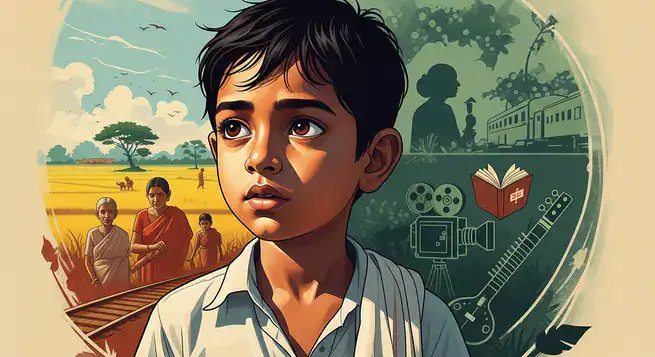
Satyajit Ray’s Apu Trilogy remains a cornerstone of international cinema, marking a high point in Indian filmmaking. These three films changed how the world viewed Eastern storytelling.
This quiz focuses on the production hurdles, artistic choices, and the legacy left behind by this landmark series. We cover everything from the unique cinematography to the challenges Ray faced while securing funding.
Check out our deeper looks into South Asian cinema, explore specific film director profiles, and learn more about Oscars history.
Who directed the acclaimed Apu Trilogy, a landmark of Indian cinema?
Bimal Roy
Bimal Roy
Satyajit Ray
Satyajit Ray
Ritwik Ghatak
Ritwik Ghatak
Guru Dutt
Guru Dutt
What was the first film in the Apu Trilogy, which premiered in 1955?
Pather Panchali
Pather Panchali
Aparajito
Aparajito
Apur Sansar
Apur Sansar
Kanchenjungha
Kanchenjungha
Which statement best describes the funding situation for ‘Pather Panchali’?
It was fully funded by a major Hollywood studio.
It was fully funded by a major Hollywood studio.
It was the most expensive Indian film of its time.
It was the most expensive Indian film of its time.
The film was financed entirely by the Indian government.
The film was financed entirely by the Indian government.
Production was delayed for years due to a lack of funds.
Production was delayed for years due to a lack of funds.
Which organization eventually provided the funding necessary to complete ‘Pather Panchali’?
A local theater chain owner
A local theater chain owner
The West Bengal government
The West Bengal government
A private investor from Kolkata
A private investor from Kolkata
The British Film Institute
The British Film Institute
Which legendary Japanese director famously praised the trilogy, stating that not having seen them is like ‘not seeing the sun or the moon’?
Alfred Hitchcock
Alfred Hitchcock
The Beatles
The Beatles
Charlie Chaplin
Charlie Chaplin
Akira Kurosawa
Akira Kurosawa
Which major publication’s critic, Bosley Crowther, described the films as a “vivid and touching” experience for Western audiences?
The New York Times
The New York Times
Cahiers du Cinéma
Cahiers du Cinéma
The Guardian
The Guardian
Variety
Variety
What was the primary profession Satyajit Ray practiced for many years alongside his film career?
Journalistic reporting
Journalistic reporting
Architectural drafting
Architectural drafting
Academic lecturing in history
Academic lecturing in history
Graphic design and illustration
Graphic design and illustration
The Apu Trilogy is based on literary works by which author?
Bengali writer Bibhutibhushan Bandyopadhyay
Bengali writer Bibhutibhushan Bandyopadhyay
English novelist R.K. Narayan
English novelist R.K. Narayan
Bankim Chandra Chatterjee
Bankim Chandra Chatterjee
Rabindranath Tagore
Rabindranath Tagore
What specific Academy Award was presented to Satyajit Ray in 1992?
Best Director
Best Director
Best Original Screenplay
Best Original Screenplay
A Lifetime Achievement Oscar
A Lifetime Achievement Oscar
Best International Feature Film
Best International Feature Film
What prevented Satyajit Ray from attending the 1992 Academy Awards ceremony in person?
The Academy lost his nomination documents.
The Academy lost his nomination documents.
He refused to accept the award due to political disagreements.
He refused to accept the award due to political disagreements.
He arrived too late to the ceremony.
He arrived too late to the ceremony.
He was dangerously ill and had to accept it from his hospital bed.
He was dangerously ill and had to accept it from his hospital bed.
Who was the renowned cinematographer that collaborated with Ray on the Apu Trilogy and pioneered innovative shooting techniques?
Subrata Mitra
Subrata Mitra
Durgatosh Mukherjee
Durgatosh Mukherjee
Dulal Dutta
Dulal Dutta
Bansi Chandragupta
Bansi Chandragupta
Who composed the haunting and iconic musical score for the Apu Trilogy?
Salil Chowdhury
Salil Chowdhury
Vilayat Khan
Vilayat Khan
Ravi Shankar
Ravi Shankar
Alla Rakha
Alla Rakha
How did Ray’s parallel career as an artist influence the production of his films?
He wrote short stories for children in a local magazine.
He wrote short stories for children in a local magazine.
He taught painting at the local university.
He taught painting at the local university.
He designed his own book covers and movie posters.
He designed his own book covers and movie posters.
He composed musical scores for other directors.
He composed musical scores for other directors.
The visual style of ‘Pather Panchali’ is often compared to which post-war European film movement?
French New Wave
French New Wave
Neorealism
Neorealism
German Expressionism
German Expressionism
Soviet Montage Theory
Soviet Montage Theory
Which prestigious international film festival gave ‘Pather Panchali’ the “Best Human Document” award in 1956?
Berlin International Film Festival
Berlin International Film Festival
Venice Film Festival
Venice Film Festival
Cannes Film Festival
Cannes Film Festival
London Film Festival
London Film Festival
What unique preparation method did Ray use to ensure the visual consistency of his scenes?
He relied entirely on improvisation on the set.
He relied entirely on improvisation on the set.
The script was written during a voyage to London.
The script was written during a voyage to London.
He drew detailed storyboards before filming began.
He drew detailed storyboards before filming began.
The script was adapted from a comic book series.
The script was adapted from a comic book series.
What is the overarching narrative structure of the Apu Trilogy?
It portrays the life of Apu from childhood to adulthood.
It portrays the life of Apu from childhood to adulthood.
It is a collection of three independent anthology stories.
It is a collection of three independent anthology stories.
It documents the history of Indian independence.
It documents the history of Indian independence.
It follows three unrelated families in rural Bengal.
It follows three unrelated families in rural Bengal.
What aspect of Ray’s early education played a crucial role in his artistic development?
He was a professional athlete.
He was a professional athlete.
He studied at Visva-Bharati University under the guidance of Rabindranath Tagore.
He studied at Visva-Bharati University under the guidance of Rabindranath Tagore.
He was a trained classical dancer.
He was a trained classical dancer.
He was initially trained as a photographer.
He was initially trained as a photographer.
Which of these was a significant human resource challenge during the filming of ‘Pather Panchali’?
Frequent strikes by the film crew
Frequent strikes by the film crew
Disputes over actor salaries
Disputes over actor salaries
A lack of experienced actors and technicians
A lack of experienced actors and technicians
Lead actors leaving the production midway
Lead actors leaving the production midway
Which film in the trilogy won the Golden Lion at the Venice Film Festival in 1957?
Apur Sansar
Apur Sansar
Pather Panchali
Pather Panchali
Aparajito
Aparajito
Devi
Devi
Why were Western critics particularly struck by the realism of the Apu Trilogy?
The film explored the complexities of rural poverty.
The film explored the complexities of rural poverty.
The film featured a famous Bollywood song-and-dance sequence.
The film featured a famous Bollywood song-and-dance sequence.
The film introduced color photography to Indian cinema.
The film introduced color photography to Indian cinema.
The film successfully integrated Western classical music.
The film successfully integrated Western classical music.
Besides his work in film and illustration, what other significant literary contribution did Ray make?
He was the editor of a magazine and wrote detective stories.
He was the editor of a magazine and wrote detective stories.
He was a professional journalist for a Bengali newspaper.
He was a professional journalist for a Bengali newspaper.
He was a professor of literature.
He was a professor of literature.
He worked as a government official.
He worked as a government official.
You can do better
Not bad
Great!
If you enjoyed this, browse our other categories including European cinema, classic cinematography techniques, and major award records.