


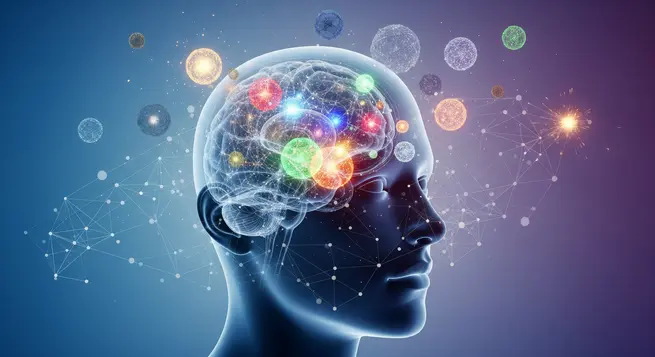

Human emotions are more complex than the standard happy or sad labels suggest. A 2017 study by Keltner and Cowen established a map of 27 distinct categories of feeling, moving beyond basic emotional models to capture the nuance of our inner life.
This quiz focuses on the mechanics of that 27-emotion framework and how our brains process these states. You will encounter questions about neuropsychology, the evolutionary purpose of specific feelings, and how abstract thought intersects with our biological responses.
Browse our other collections to see more, including animated film analysis, movie score history, and award show statistics.
Which psychologist led the 2017 study that mapped 27 distinct categories of human emotion?
Paul Ekman
Paul Ekman
B.F. Skinner
B.F. Skinner
Dacher Keltner
Dacher Keltner
Sigmund Freud
Sigmund Freud
In the 2017 study identifying 27 emotions, what primary input did researchers use for the initial data collection?
Self-reported feelings via video clips
Self-reported feelings via video clips
Neuroimaging during problem-solving
Neuroimaging during problem-solving
Facial expressions only
Facial expressions only
Blood pressure analysis
Blood pressure analysis
What type of conceptual framework did Keltner and Cowen use to represent the relationship between the 27 categories of emotion?
Categorical model
Categorical model
Dimensional model
Dimensional model
Evolutionary triad model
Evolutionary triad model
Continuous gradient model
Continuous gradient model
Which of the following is NOT typically classified as one of the 27 distinct emotions in the Keltner-Cowen study?
Awe
Awe
Confusion
Confusion
Boredom
Boredom
Hunger
Hunger
Based on the psychological mapping of multiple emotions, how do these internal states relate to one another?
Emotions are highly distinct and never blend
Emotions are highly distinct and never blend
Emotions exist on a smooth, interconnected gradient landscape
Emotions exist on a smooth, interconnected gradient landscape
The brain ignores transitionary feelings
The brain ignores transitionary feelings
Emotions are purely random neurological flashes
Emotions are purely random neurological flashes
Which area of the brain is primarily responsible for the complex, abstract evaluation of emotional input?
Brainstem
Brainstem
Prefrontal cortex
Prefrontal cortex
Amygdala
Amygdala
Hippocampus
Hippocampus
Which neurotransmitter is most heavily associated with the anticipation phase of reward-based emotion?
Glutamate
Glutamate
Acetylcholine
Acetylcholine
Serotonin
Serotonin
Dopamine
Dopamine
What is the primary evolutionary purpose of having a wide array of distinct emotional states?
To suppress abstract critical thinking
To suppress abstract critical thinking
To avoid social bonding
To avoid social bonding
To increase computational load on the brain
To increase computational load on the brain
To simplify evolutionary survival decisions
To simplify evolutionary survival decisions
How does modern cognitive psychology define the relationship between abstract thought and emotion?
Logic is separate from affective responses
Logic is separate from affective responses
Abstract thought requires the total removal of affective influence
Abstract thought requires the total removal of affective influence
It is a rapid, heuristic form of information processing
It is a rapid, heuristic form of information processing
Affective states are artifacts of primitive brain function with no current utility
Affective states are artifacts of primitive brain function with no current utility
The 27-emotion model highlights complex social states not found in basic models. Which set of emotions represents this complexity?
Fear, surprise, and anticipation
Fear, surprise, and anticipation
Empathy, admiration, and awe
Empathy, admiration, and awe
Joy, sadness, and disgust
Joy, sadness, and disgust
Aggression, calm, and focus
Aggression, calm, and focus
Which brain region is critical for processing interoception, the awareness of internal states often linked to emotional intensity?
Hypothalamus
Hypothalamus
Corpus callosum
Corpus callosum
Insula
Insula
Thalamus
Thalamus
Which statement correctly describes the physiological role of the emotions identified in the 27-emotion research?
They are purely verbal constructs with no physical basis
They are purely verbal constructs with no physical basis
They only emerge after 20 years of cognitive development
They only emerge after 20 years of cognitive development
They occur in complete isolation from external stimuli
They occur in complete isolation from external stimuli
They often trigger physical physiological changes to signal the body to react
They often trigger physical physiological changes to signal the body to react
Current neurobiological research suggests what about the ‘design’ of the brain regarding emotional expression?
A single circuit for all negative emotions
A single circuit for all negative emotions
Distributed neural networks that fire in overlapping patterns
Distributed neural networks that fire in overlapping patterns
Specific, localized neural pathways for every single emotion
Specific, localized neural pathways for every single emotion
A fixed storage bank in the amygdala
A fixed storage bank in the amygdala
How does the ‘abstract thought sequence’ of the brain utilize emotional cues?
The process of involuntary memory recall
The process of involuntary memory recall
The suppression of all emotional outbursts
The suppression of all emotional outbursts
The subjective experience of time
The subjective experience of time
The ability to categorize novel stimuli in the environment
The ability to categorize novel stimuli in the environment
What does cross-cultural research into emotion suggest about the design of how we experience feelings?
They are entirely learned through local language and have no biological basis
They are entirely learned through local language and have no biological basis
Only three universal states exist globally
Only three universal states exist globally
They are biologically identical in all humans regardless of surroundings
They are biologically identical in all humans regardless of surroundings
They vary significantly across cultures regarding expression but not existence
They vary significantly across cultures regarding expression but not existence
Which biological reaction is most linked to the social bonding aspect of ’empathy’ in the 27-emotion model?
Release of oxytocin
Release of oxytocin
Rapid pupil dilation
Rapid pupil dilation
Increased heart rate
Increased heart rate
Decreased core temperature
Decreased core temperature
When considering brain design, what is the best explanation for how the brain manages complex emotional inputs?
The brain functions as a computer with fixed slots for emotion
The brain functions as a computer with fixed slots for emotion
The brain processes emotion and abstract logic in entirely unconnected hemispheres
The brain processes emotion and abstract logic in entirely unconnected hemispheres
The brain utilizes dynamic, predictive modeling to handle emotional data
The brain utilizes dynamic, predictive modeling to handle emotional data
Emotions have no impact on the brain’s decision-making architecture
Emotions have no impact on the brain’s decision-making architecture
Among the 27 emotions identified, which one bridges the gap between memory and current situational appraisal?
Sympathetic pain
Sympathetic pain
Sexual desire
Sexual desire
Boredom
Boredom
Nostalgia
Nostalgia
In the context of behavioral psychology, what characterizes an ‘abstract thought sequence’ involving emotion?
It is the process of shutting down the limbic system entirely
It is the process of shutting down the limbic system entirely
It is the ability to maintain multiple emotional variables while evaluating options
It is the ability to maintain multiple emotional variables while evaluating options
It is the storage of data in the long-term memory exclusively
It is the storage of data in the long-term memory exclusively
It is the process of ignoring immediate input to focus on the future
It is the process of ignoring immediate input to focus on the future
What is the automatic, rapid process that the brain performs to determine the ’emotional valence’ of a stimulus?
Neurological pruning
Neurological pruning
Primary appraisal
Primary appraisal
Social feedback projection
Social feedback projection
Sensory gating
Sensory gating
Why did psychologists propose that humans possess as many as 27 emotions rather than just 6 basic ones?
Abstract thought is a separate evolutionary path from emotion
Abstract thought is a separate evolutionary path from emotion
The brain has reached maximum capacity and cannot develop new emotions
The brain has reached maximum capacity and cannot develop new emotions
Social environments require nuanced responses far beyond basic survival
Social environments require nuanced responses far beyond basic survival
Fear alone is enough to explain it
Fear alone is enough to explain it
From a design perspective, what is the ultimate advantage of possessing complex, category-specific emotions?
It provides a buffer against stress
It provides a buffer against stress
It allows for rapid behavioral adjustments in complex social hierarchies
It allows for rapid behavioral adjustments in complex social hierarchies
It reduces the need for logical communication
It reduces the need for logical communication
It ensures that humans always choose the most rational option in a crisis
It ensures that humans always choose the most rational option in a crisis
You can do better
Not bad
Great!
If you enjoy this subject, we have plenty more to see. Check out our deep dives into cinematography techniques, the evolution of sci-fi and fantasy, and the history of cinema sound and color.